

Is a Green Mobility Scooter Really Green?
Transport is the second-largest contributor of greenhouse gas emissions. But are electric scooters that dock with shared docks really green?
Scooter startup companies like Tier, Dott, Voi and Circ all say they are. We asked them about their sustainability plan. Here's how they did. Dott's warehouses are powered with 100% renewable energy and its fleet is 90% electric.
What is a Green Scooter?
A green mobility scooter is one that is powered by electricity which is typically less polluting than gasoline and other fossil fuels. Electric scooters that are rental via apps are becoming popular in a variety of cities across the world. They are an easy and convenient method of traveling without an automobile. Are these scooters green? This is the question we will try to answer in this article.
To answer this question, we must look at the different phases of a vehicle's life cycle. Its manufacturing phase (how polluting it is to extract raw materials, transform them, and construct the vehicle) and its energy production phase (how much pollution is created when it charges). Finally, there is also the use phase of the scooter and its final phase (how it is maintained and then recycled or destroyed after it is no longer working).
The most recent study on this subject was conducted by researchers from North Carolina State University. They found that on average, electric scooters emit 141 g of CO2 per kilometer and per person when driven over their entire lifespan. This is still 2 times more than driving an electric vehicle. The issue is that most scooters are only used for a few months before they are destroyed, thrown out or repurposed.
We are not convinced by the fact that scooters are eco-friendly. If people opt to ride scooters instead of cars then they will need to replace them with more sustainable transportation options such as public transport and cycling. Scooters are not an alternative to eco-friendly vehicles and they don't reduce the community's fossil fuel consumption or greenhouse gas emissions.
Green Power Scooters
Green Power scooters are the best option if you wish to remain mobile and independent. They are all constructed with high-quality materials and are class 3 mobility Scooters which means they are road legal. They also include free VIP aftercare and support for 12 months.
All Green Power scooters are extremely affordable and have outstanding green energy credentials. The GP Unique 500, for example, is an excellent choice for those looking for a very green scooter that can go up to 45 miles on one charge. It also comes with an additional lithium battery upgrade for more power.
The best feature of a green motorbike is that it's durable. This means that you can navigate through rough terrain but still enjoy a smooth ride. The Green Transporter Cheeta Ninja, for instance, has top of the line off-road turf tires that can take you over grass, dirt and sand effortlessly. They can also tackle hills, with a maximum incline of 35 degrees.
You'll require assistance to lift and put away these mobility scooters when not in use. It might not be feasible for you to buy an expensive mobility scooter if you are a single person or have a small family. You should also think about how often you will be driving the scooters and whether or not you are able to transport them in your car. If not, it may be better to opt for an ultra-lightweight foldable model. They are more convenient to store and carry.
Class 3 Scooters
These scooters are perfect for those who are able to walk but don't enjoy it. These scooters feature an impressive motor and larger battery. They can reach speeds up to 8 miles per hour. They are the ideal option for long trips. The sophisticated suspension system provides an enjoyable ride even on uneven terrain.
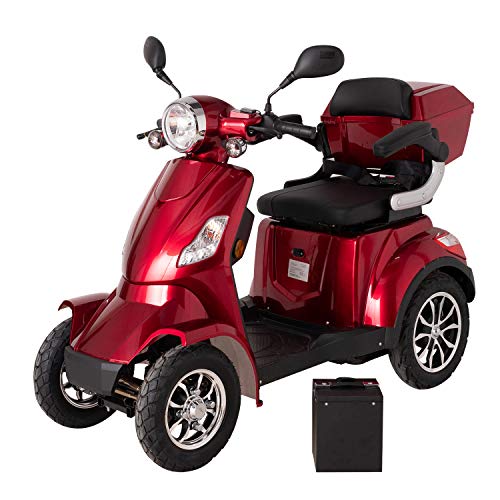
Although they cost more than Class 2 models, these mobility scooters offer the independence that many people would like. They are ideal for people who wish to travel further distances, visit family or friends, or participate in activities that otherwise not be able to.
A class 3 scooter can be used on the road however you'll have to follow the Highway Code. But, unlike cars and motorbikes you don't need a licence to operate one. It is recommended to take an exam to ensure your safety and confidence when operating a motorbike.
The model in class 3 has more power and is more durable and able to stand up to rough terrain. It can climb steep hills and manage steep inclines. This lets you explore new areas or participate in outdoor activities you were previously unable to participate in.
We recommend that you visit our Lewes showroom if you're looking to purchase the class 3 scooter to see the features for yourself. Our staff is available to help you determine which model is right for you, and also to help you choose the purchase. We offer free home installation along with a range of additional accessories to make your scooter more functional and enjoyable. You can even try out a range of models in our showroom.
green power scooter or four wheel scooters
When you are looking for a new mobility scooter there are two main styles to choose from that are 3-wheel and 4-wheel. The distinctions between the two models aren't too obvious but crucial when selecting the right model to suit your needs and lifestyle.
The most obvious major difference is the radius of turning that measures the amount of space needed to make a full turn. This is an important factor for people who spend a large portion of their time indoors and have to maneuver in tight spaces. A 3-wheeled scooter, as an instance, might have a turn radius that can be up to 10 inches smaller than its 4-wheeled counterpart.
Three-wheeled mobility vehicles also tend to be smaller and have a slimmer base, making them easier to maneuver in tight spaces. In actual fact the ability to make a precise turn with nimbility is among the biggest advantages of this type of scooter. Whether you're in the middle of a crowded grocery store aisle or going down an alleyway, this feature comes in handy.
A 3-wheeler also provides more legroom. This is due to the absence of two front wheels and is a major benefit for taller people or those with knee or leg injuries.
On the other hand, 4-wheel scooters are designed to be more versatile and can be used both outdoors and indoors. While they have a wider turning radius than 3-wheel models, many can still maneuver through doorways that aren't standard. They are more stable and can be an ideal choice for those who have balance issues. A 4-wheel mobility scooter has larger wheels which can handle rougher outdoor terrain.
Safety Features
Green Transporter has a number of scooters designed with safety in mind. They offer a range of mobility scooters, with the most popular being their Cheeta Ninja model which is an enclosed scooter that protects from the elements. This enables the rider to be protected in all weather conditions. It is spacious enough to hold two people and can support a weight of 550 lbs. It also comes with a Delta tiller, an automotive front storage compartments, and more.
The rising popularity of powered micro-mobility vehicles could lead to changes in the epidemiology of accidents, and there is an urgent need to improve methods of analysis for accidents and preventive measures (Botton, Takagi, Shlez, Yechiam, & Rosenbloom, 2022). This requires a deep understanding of their usage patterns and their interaction with various types of infrastructures.
One example is the existence of e-scooters in public spaces with different speed settings that could increase accidents rates compared with private ones. This was demonstrated in simulations that compare the g-force applied to people who have a passive safety system. Utilizing a thermoplastic material that is deformable the prototype developed by CESVIMAP reduces by as much as 85 percent the energy transfer in an accident.
Another example is the interaction of electric scooters and vulnerable road users in various kinds of infrastructure. The interaction can range from a routine traffic encounter to a collision or conflict depending on the spatiotemporal position of both road users and their speed regimes (Brown, Klein, Thigpen, & Williams, 2024). Therefore, it is vital to identify and evaluate potential new accidents and their causes in order to determine an appropriate set of steps to be taken by the transportation industry.